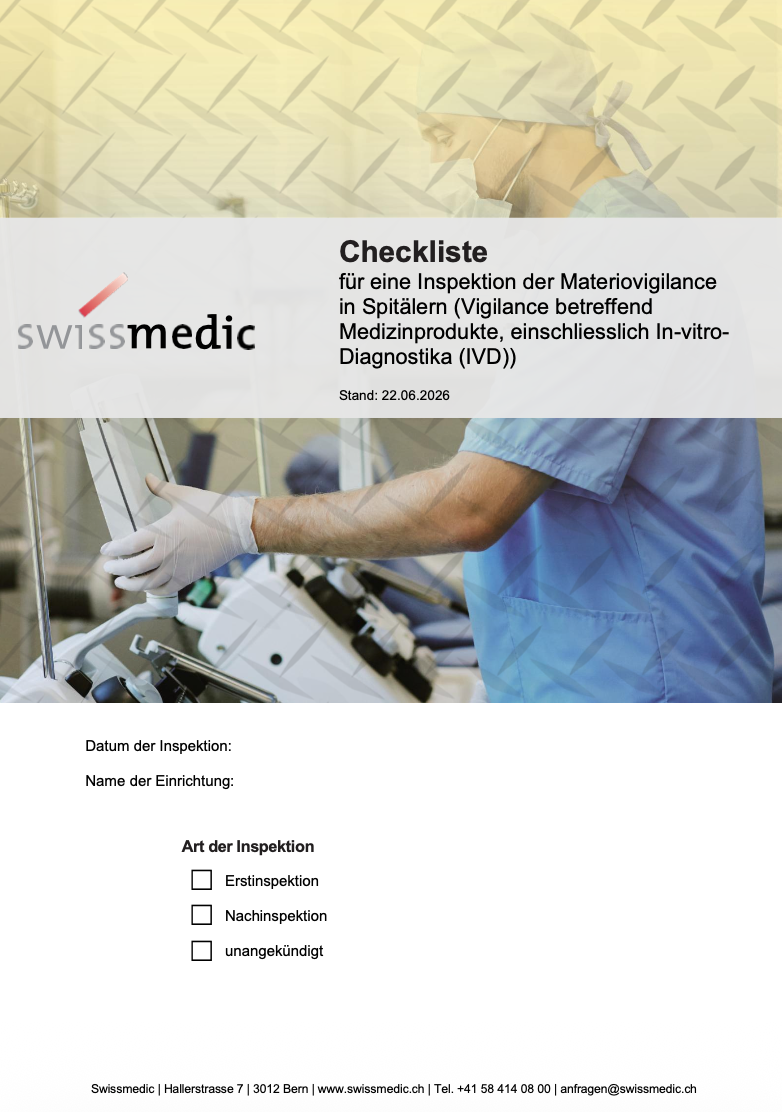
Swissmedic has updated its checklist for materiovigilance inspections in hospitals, dated 22 June 2026.
The checklist applies to vigilance concerning medical devices, including in vitro diagnostic medical devices, used in hospitals.
According to the document, the topics covered are based on the Swiss Good Practice of Materiovigilance in Hospitals, 2026 edition. Requirements are numbered in red, while recommendations are numbered in blue.
Scope of the Checklist
The checklist applies to all medical devices, including IVDs, within the scope of the Swiss Medical Devices Ordinanceand In Vitro Diagnostic Medical Devices Ordinance, where these devices are used in hospitals.
Swissmedic also notes that specific information on IVD materiovigilance will be included in the Swiss Good Practice of Materiovigilance in the field of IVD, which will be published at a later date.
Quality Management for Materiovigilance
The checklist covers the hospital’s quality management system for materiovigilance.
It includes expectations relating to:
identification and application of relevant laws and ordinances;
use of current materiovigilance guidance;
management responsibility and resource allocation;
quality objectives and continuous improvement;
definition of roles and responsibilities;
record retention;
interfaces with other vigilance systems, including pharmacovigilance, haemovigilance, radiation protection, cybersecurity and CIRS.
The checklist also addresses the appointment of a vigilance contact person, including notification to Swissmedic, appropriate training, time allocation and deputy arrangements.
Traceability and UDI
Swissmedic includes traceability as a specific inspection area.
Hospitals are expected to ensure that medical devices operated or supplied within the healthcare institution are recorded and traceable.
The checklist also refers to the capture and storage of the UDI for implantable Class III medical devices, including electronic recording and traceability to the patient.
It also addresses implant cards and in-house medical devices, including IVDs, manufactured and used exclusively within the healthcare institution.
Serious Incident Reporting
The checklist covers the reporting of serious incidents from the healthcare institution to Swissmedic and to the supplier.
It includes questions on whether healthcare professionals can recognise potentially serious incidents, whether they know their duty to report them internally, and whether the vigilance contact person is responsible for reporting to Swissmedic.
The internal reporting process should cover the definition of serious incidents, reporting criteria, responsibilities, deadlines, handling of involved devices, reporting to Swissmedic and suppliers, and documentation.
The checklist also specifically mentions point-of-care testing and in-house medical devices, including IVDs, within the serious incident reporting process.
FSN and FSCA Handling
Swissmedic also includes inspection items for the handling of Field Safety Notices and Field Safety Corrective Actionsin hospitals.
The checklist addresses whether hospitals have a process for receiving, analysing, communicating, implementing, reviewing and responding to FSNs.
It also covers documentation of actions, delayed implementation, information flow for direct application from abroad, and measures required following serious incidents involving in-house medical devices.
Staff Training
The checklist includes a section on staff training and knowledge of materiovigilance.
Hospitals are expected to ensure that staff knowledge is built and maintained through training on the internal reporting process and the FSN process.
The checklist covers mandatory internal training, training content, target audiences, refresher frequency, documentation, traceability of participation and assessment of training effectiveness.
Impact on Medical Device and IVD Manufacturers
For medical device and IVD manufacturers, the updated checklist is relevant because it clarifies the areas Swiss hospitals may be inspected on regarding materiovigilance and device safety processes.
Manufacturers should pay particular attention to:
serious incident reporting pathways involving hospitals and suppliers;
FSN and FSCA communication with healthcare institutions;
availability of product data needed for incident assessment;
UDI and traceability information, particularly for implantable Class III devices;
support for hospital implementation of safety actions;
documentation expectations linked to field safety corrective actions;
POCT and in-house device considerations where applicable;
training and communication materials provided to hospital users.
For manufacturers supplying devices to Swiss hospitals, the checklist reinforces the importance of clear vigilance communication, complete product information, timely FSN/FSCA processes and strong coordination with healthcare institutions.