WHO Publishes Policy Considerations to Improve Access to Refractive Error Care
WHO has published policy considerations to improve access to refractive error care, focusing on spectacles, service access, workforce capacity, population education, cost reduction, surveillance and research.
Anvisa Publishes Manual on Notification of Risk Class I and II Medical Devices
Anvisa has published a manual on the notification process for risk class I and II medical devices in Brazil, covering company regularization, product classification, Solicita electronic submission, documentation requirements and secondary petitions.
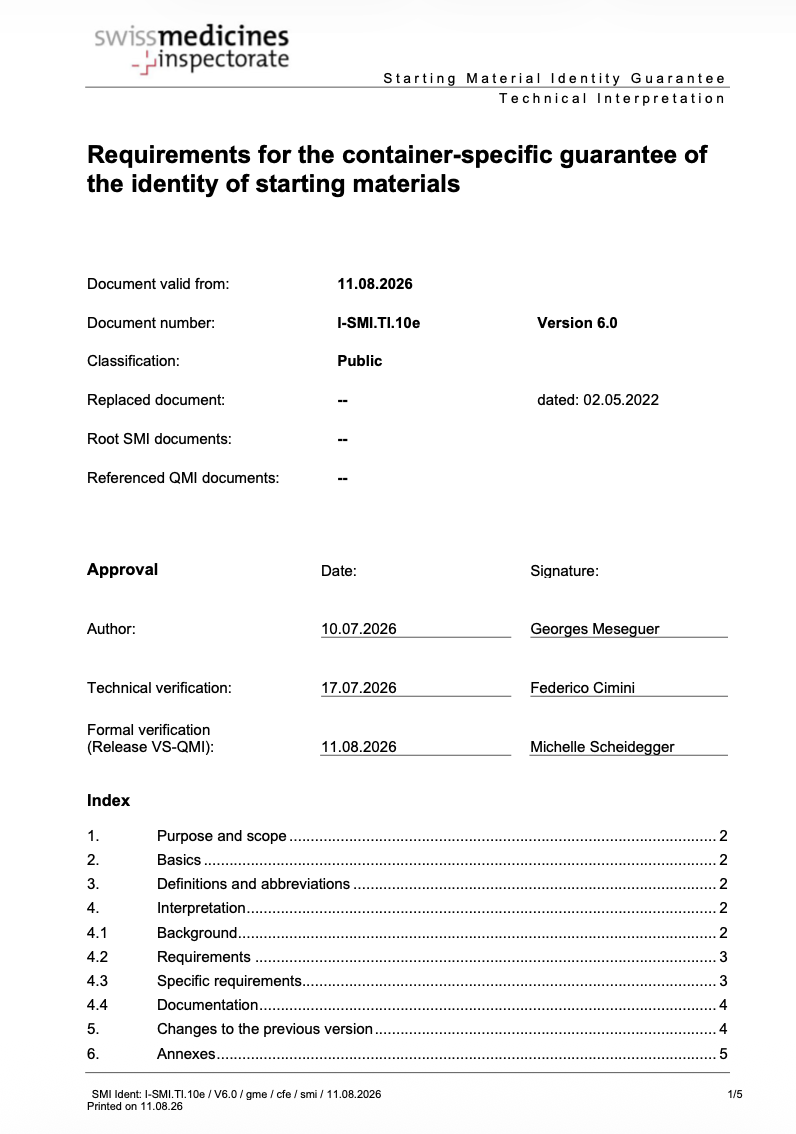
Swissmedic Updates Technical Interpretation on Container-Specific Identity Guarantee of Starting Materials
Swissmedic has published version 6.0 of its technical interpretation on the container-specific guarantee of starting material identity, defining requirements for suppliers, GMP controls, labelling, certificates of analysis and inspections.
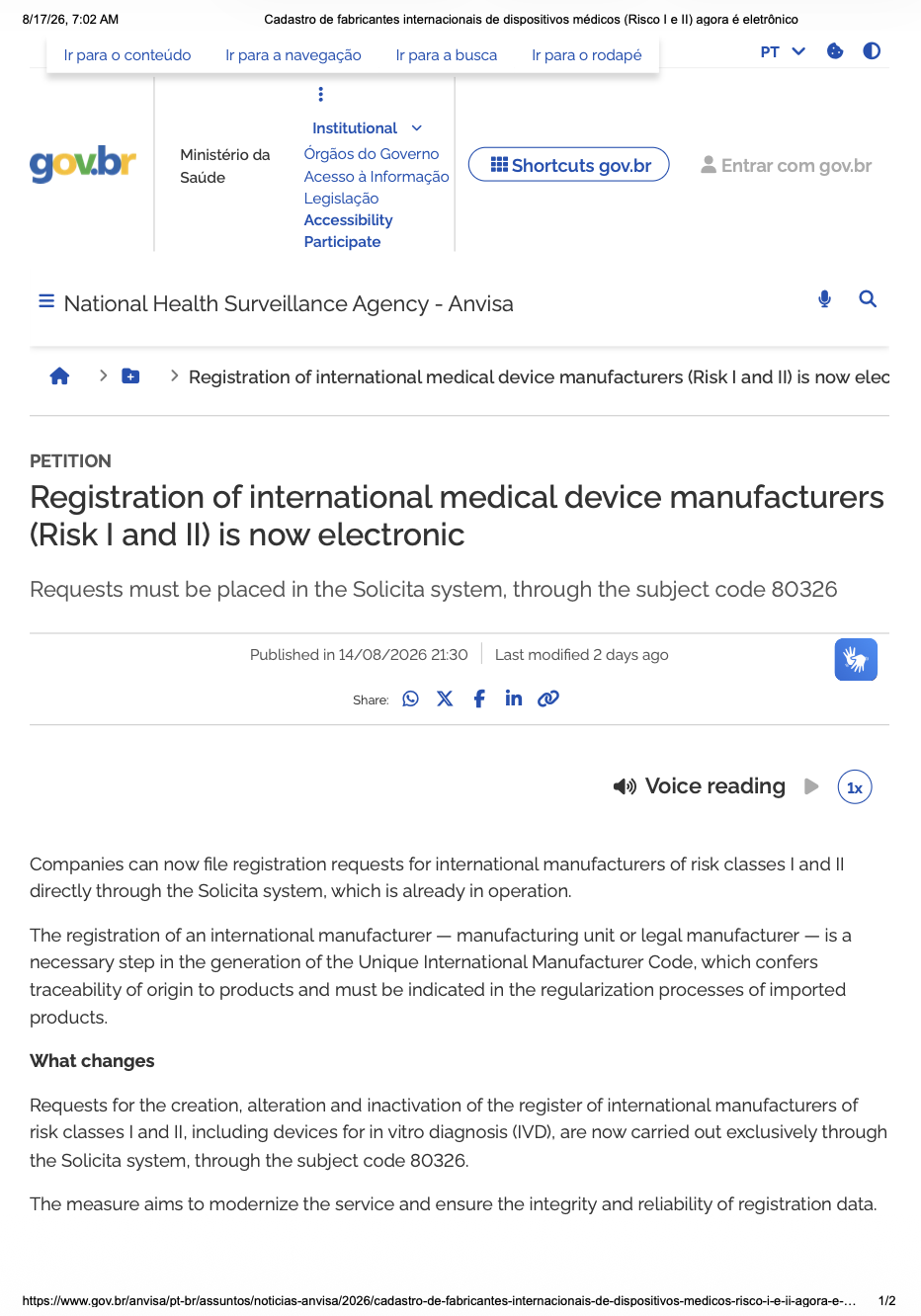
Anvisa Introduces Electronic Registration for International Manufacturers of Risk Class I and II Medical Devices
Anvisa has announced that registration requests for international manufacturers of risk class I and II medical devices, including IVDs, must now be submitted electronically through the Solicita system using subject code 80326.
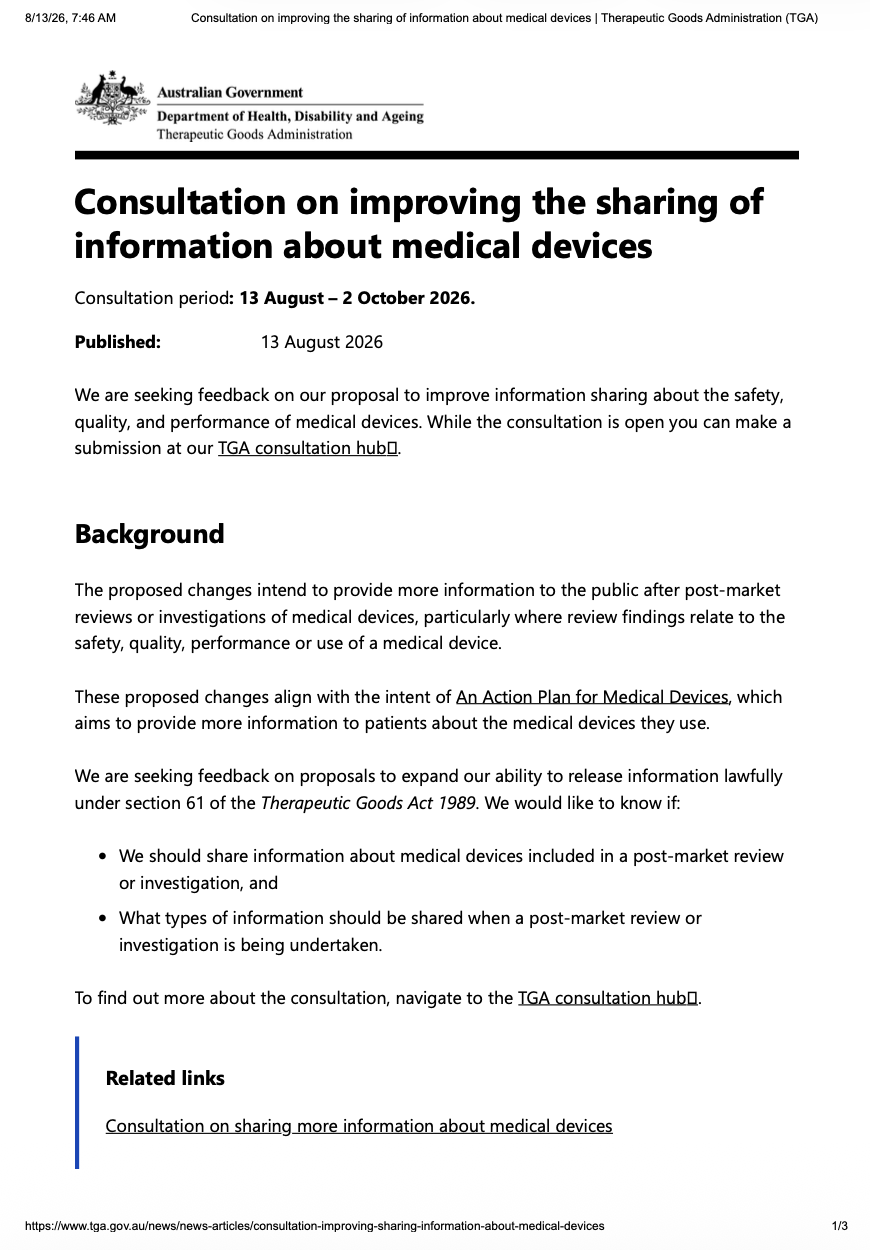
TGA Opens Consultation on Improving Information Sharing About Medical Devices
The TGA has opened a consultation on proposals to improve public information sharing about the safety, quality and performance of medical devices after post-market reviews or investigations.
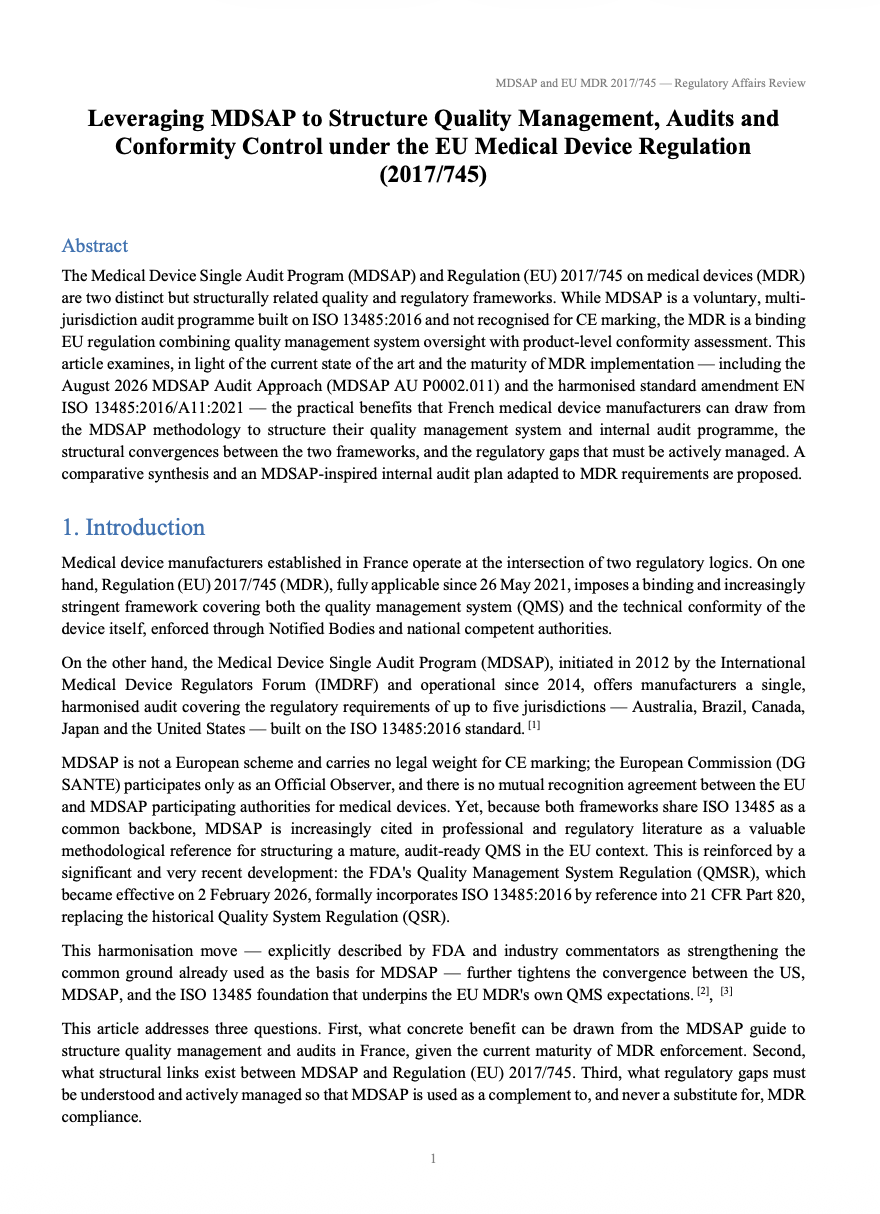
Leveraging MDSAP to Strengthen MDR Quality Management and Audit Readiness
A regulatory affairs review highlights how MDSAP methodology can help French and EU medical device manufacturers structure quality management, internal audits and conformity control under the EU MDR.
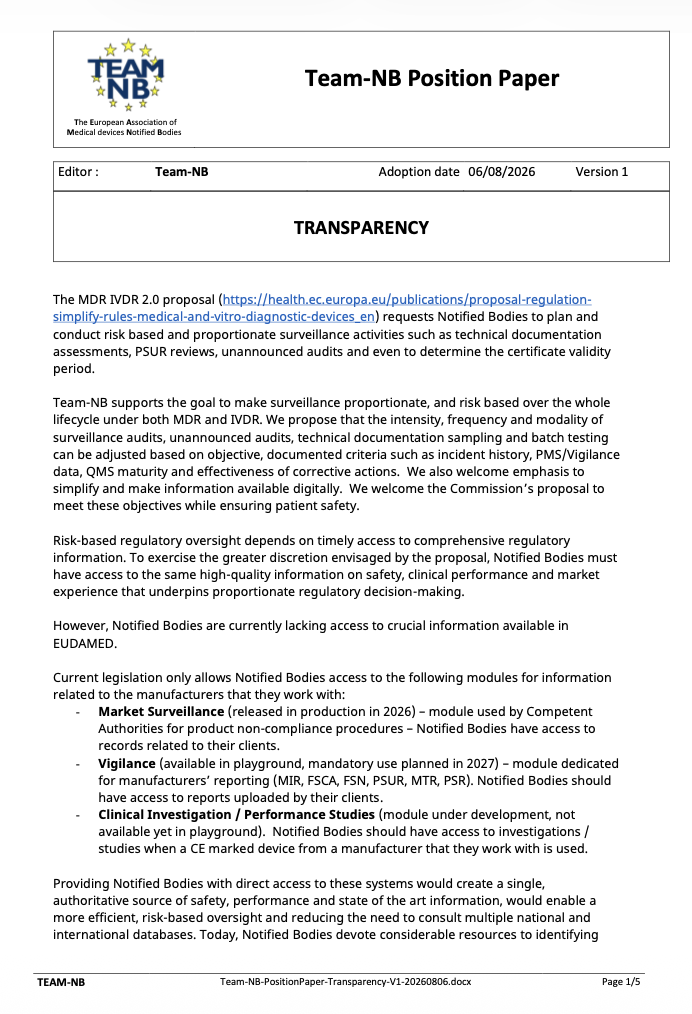
Team-NB Calls for Greater Transparency and EUDAMED Access for Notified Bodies
Team-NB has published a position paper calling for broader notified body access to EUDAMED and related regulatory systems to support risk-based surveillance under the MDR and IVDR.
Swissmedic Updates Guidance on Export Certificates for Medical Devices
Swissmedic has updated its guidance on export certificates for medical devices, including eligibility, ordering requirements, product lists, CE conformity documentation, swissdamed registration and fees.
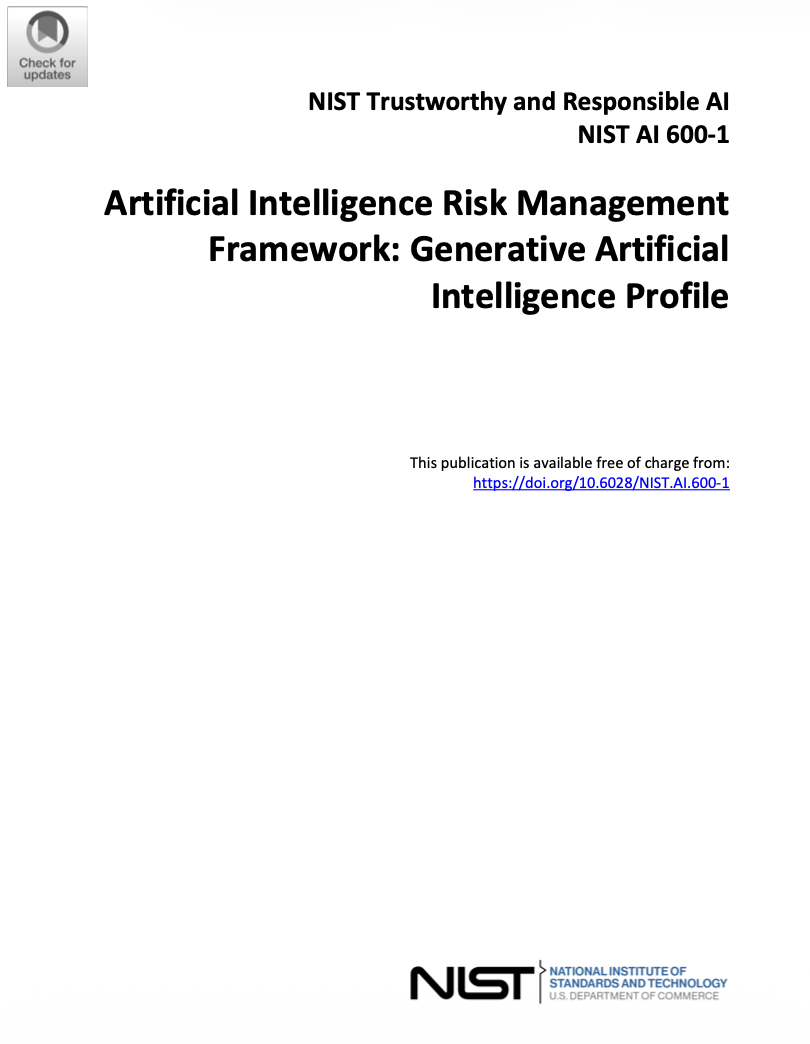
NIST Publishes Generative AI Profile for the AI Risk Management Framework
NIST AI 600-1 provides a Generative AI Profile for the AI Risk Management Framework, identifying key GAI risks and suggested actions to govern, map, measure and manage them.

Team-NB Highlights Risk-Adaptive Surveillance under the MDR and IVDR
Team-NB has presented a proposal for risk-adaptive notified body surveillance under the MDR and IVDR, aiming to reduce unnecessary burden while maintaining patient safety and effective oversight.
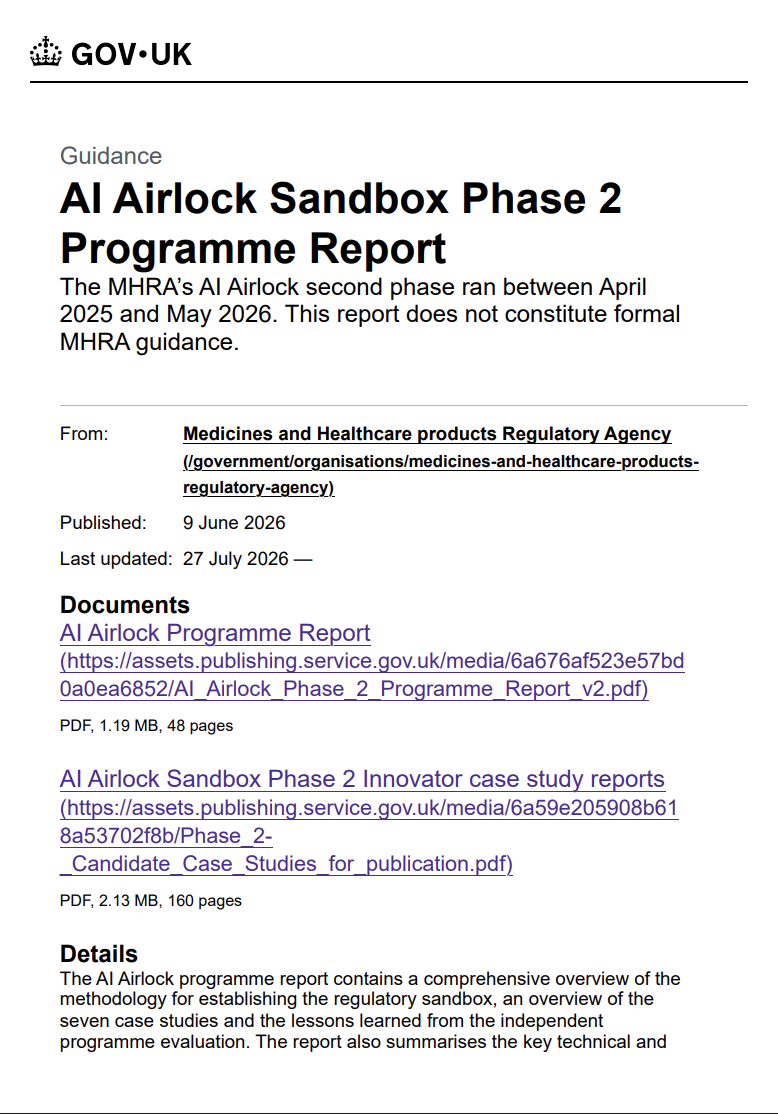
MHRA Releases AI Airlock Sandbox Phase 2 Programme Report
MHRA releases its AI Airlock Sandbox Phase 2 report, detailing regulatory insights on AI validation, PCCPs, generative AI, and real-world PMS.
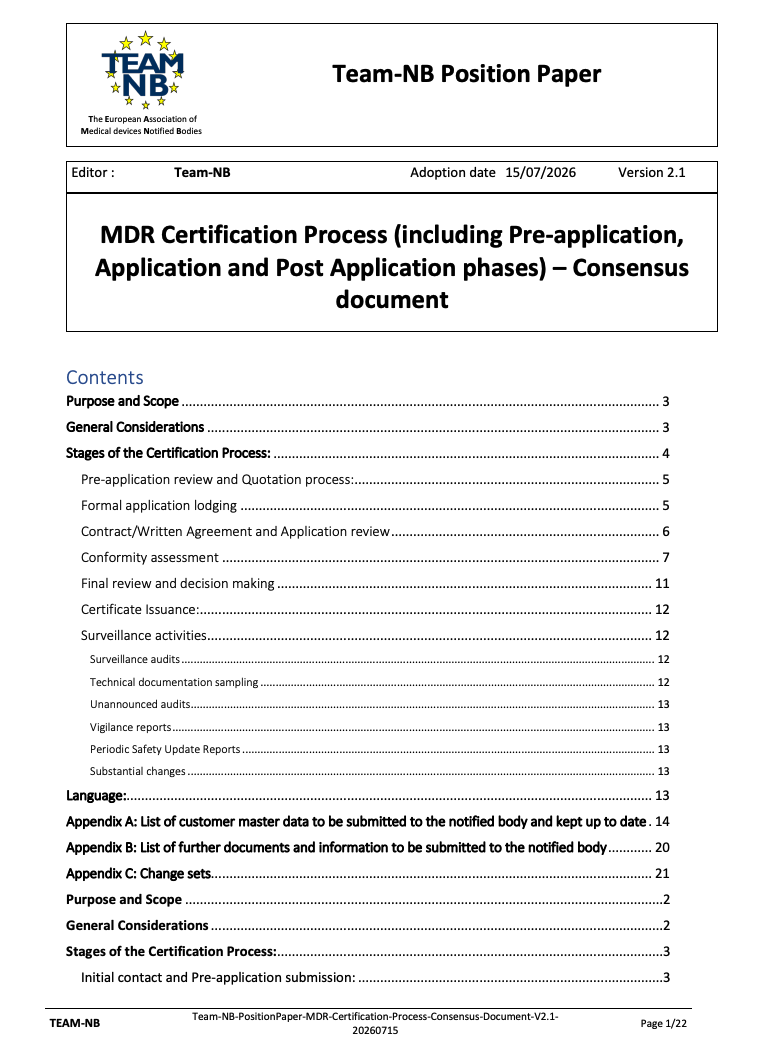
Team-NB Updates Consensus Position Paper on the MDR Certification Process
Team-NB updates its consensus position paper on the MDR certification process, standardizing pre-application, technical file review, and EUDAMED logging.
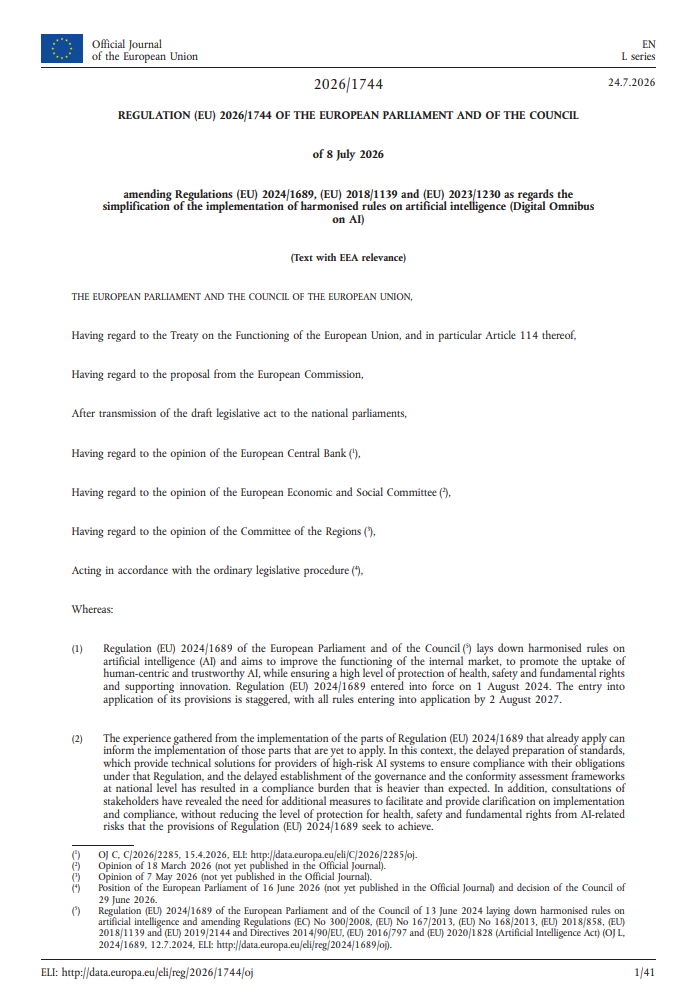
EU Publishes Regulation (EU) 2026/1744: The Digital Omnibus on Artificial Intelligence
European Union publishes Regulation (EU) 2026/1744 (Digital Omnibus on AI), amending the EU AI Act to streamline compliance, adjust timelines, and relieve SMEs.

MHRA Updates Guidance on Legal Requirements for Specific Medical Devices
The MHRA has updated its guidance on legal requirements for prosthetic, orthotic and ophthalmic devices, including classification, custom-made devices and examples.
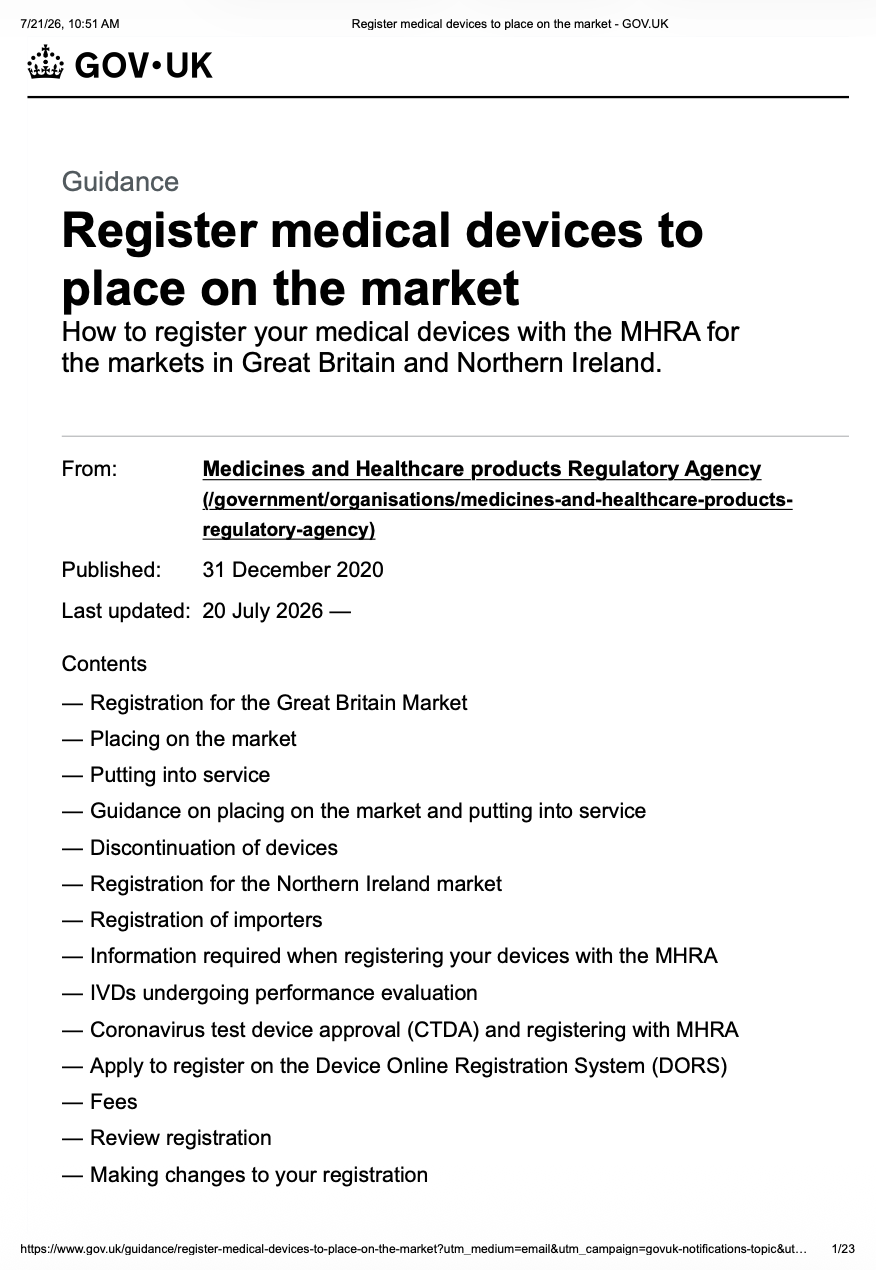
MHRA Updates Guidance on Registering Medical Devices for the UK Market
The MHRA has updated its guidance on registering medical devices, IVDs, custom-made devices, systems and procedure packs for the Great Britain and Northern Ireland markets.

Swissmedic Updates Checklist for Materiovigilance Inspections in Hospitals
Swissmedic has updated its checklist for materiovigilance inspections in hospitals, covering medical devices and IVDs, quality management, reporting, traceability, FSN/FSCA processes and staff training.
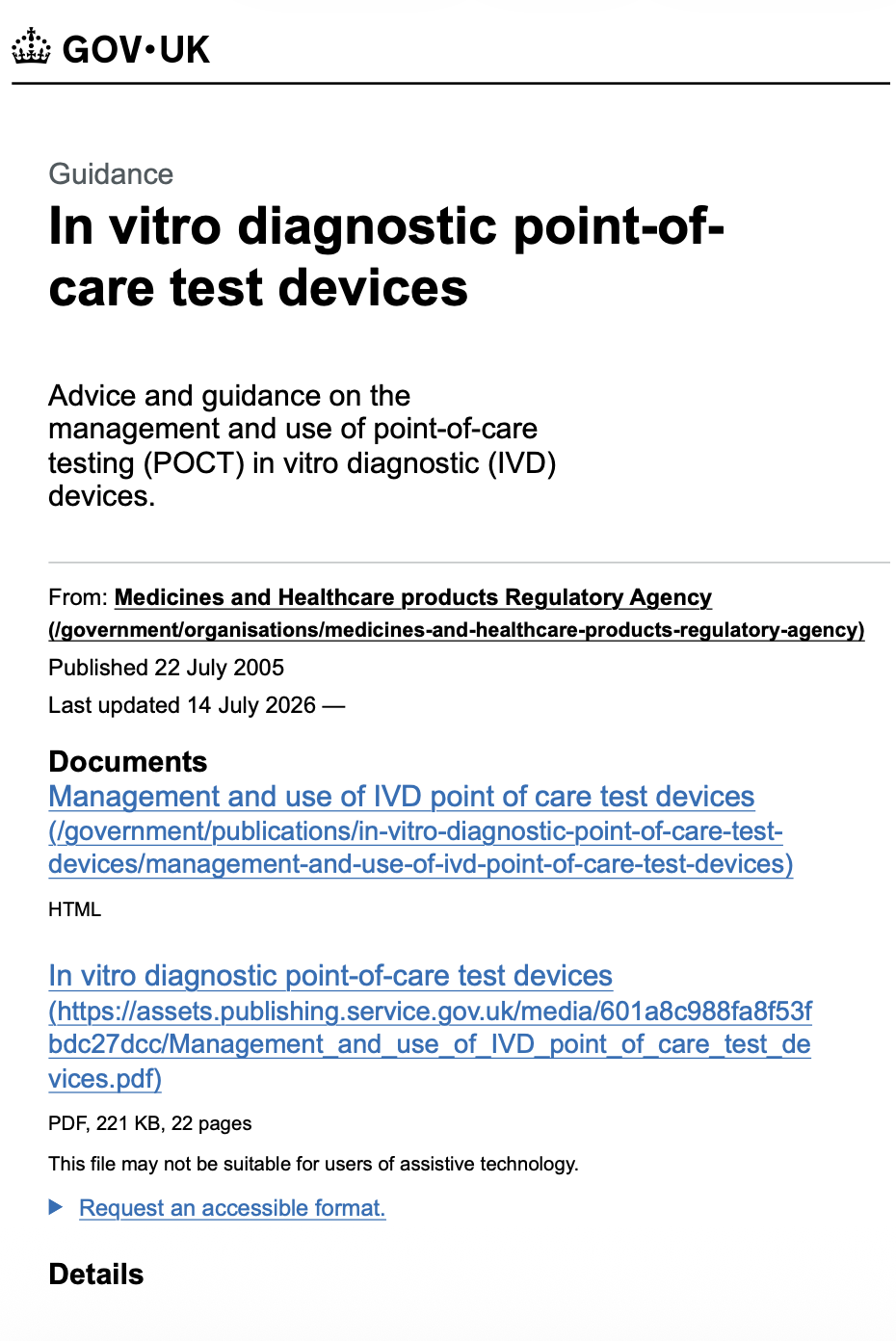
MHRA Updates Guidance on IVD Point-of-Care Test Devices
The MHRA has updated its guidance on the management and use of in vitro diagnostic point-of-care test devices, including POCT services in primary and secondary care settings.

MHRA Updates List of UK Approved Bodies for Medical Devices
The MHRA has updated its list of UK approved bodies authorised to undertake conformity assessments for medical devices under the UK MDR 2002.
Swissmedic Updates Information Sheet on Clinical Investigations of Medical Devices
Swissmedic has updated its information sheet on clinical investigations of medical devices, including approval procedures, ISO 14155, category C investigations, reporting duties and IMDRF adverse event terminology.
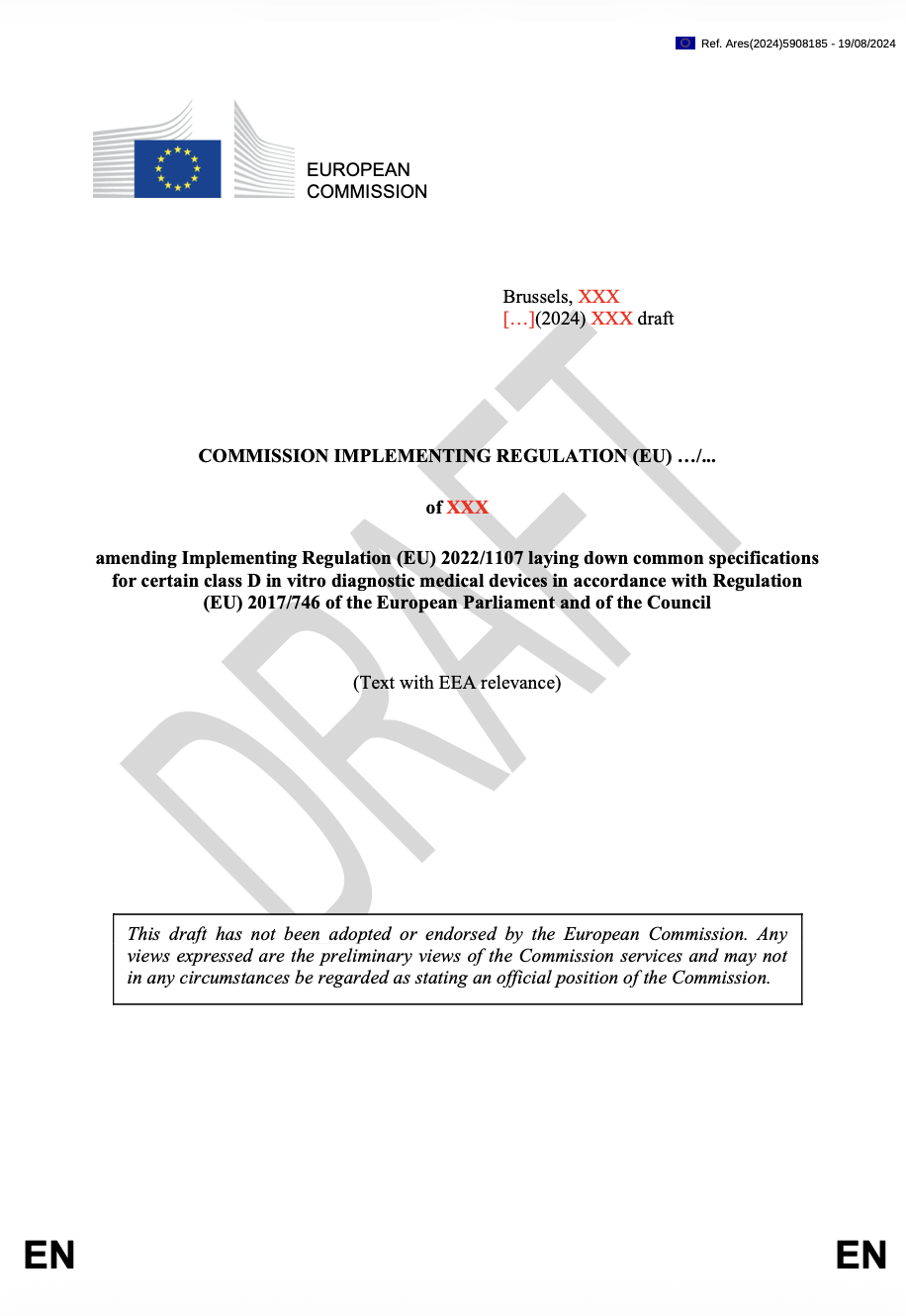
European Commission Drafts Updated Common Specifications for Certain Class D IVDs
The European Commission has published a draft implementing regulation amending common specifications for certain Class D IVDs under the IVDR, including HEV, Toxoplasma gondii, Plasmodium and arboviruses.