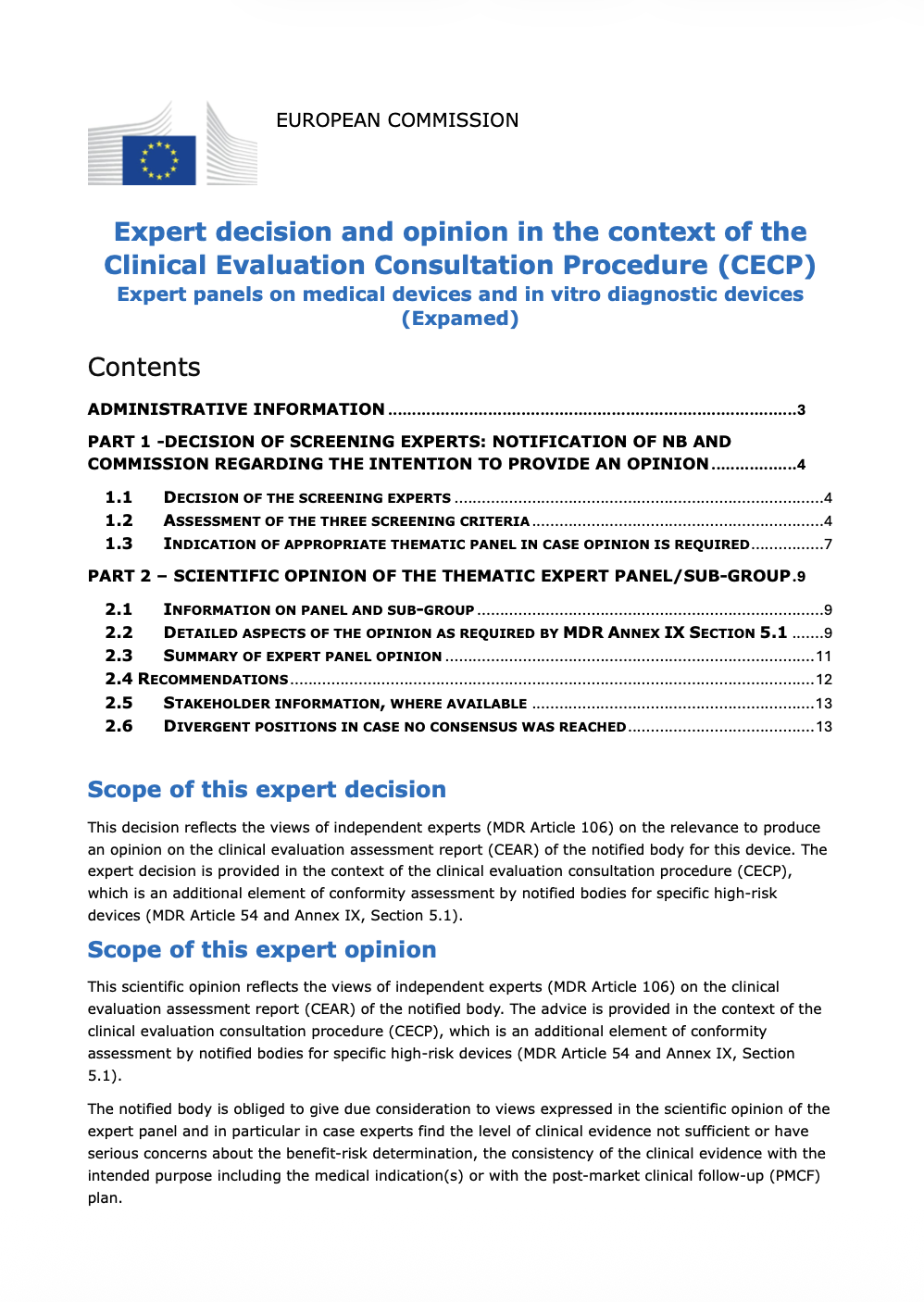
EU Expert Panel Raises Clinical Evidence Concerns in CECP Opinion on Class III Knee Device
An EU CECP expert panel has issued a scientific opinion on a Class III intra-articular knee device, identifying limitations in the clinical evidence, benefit-risk assessment and PMCF strategy.
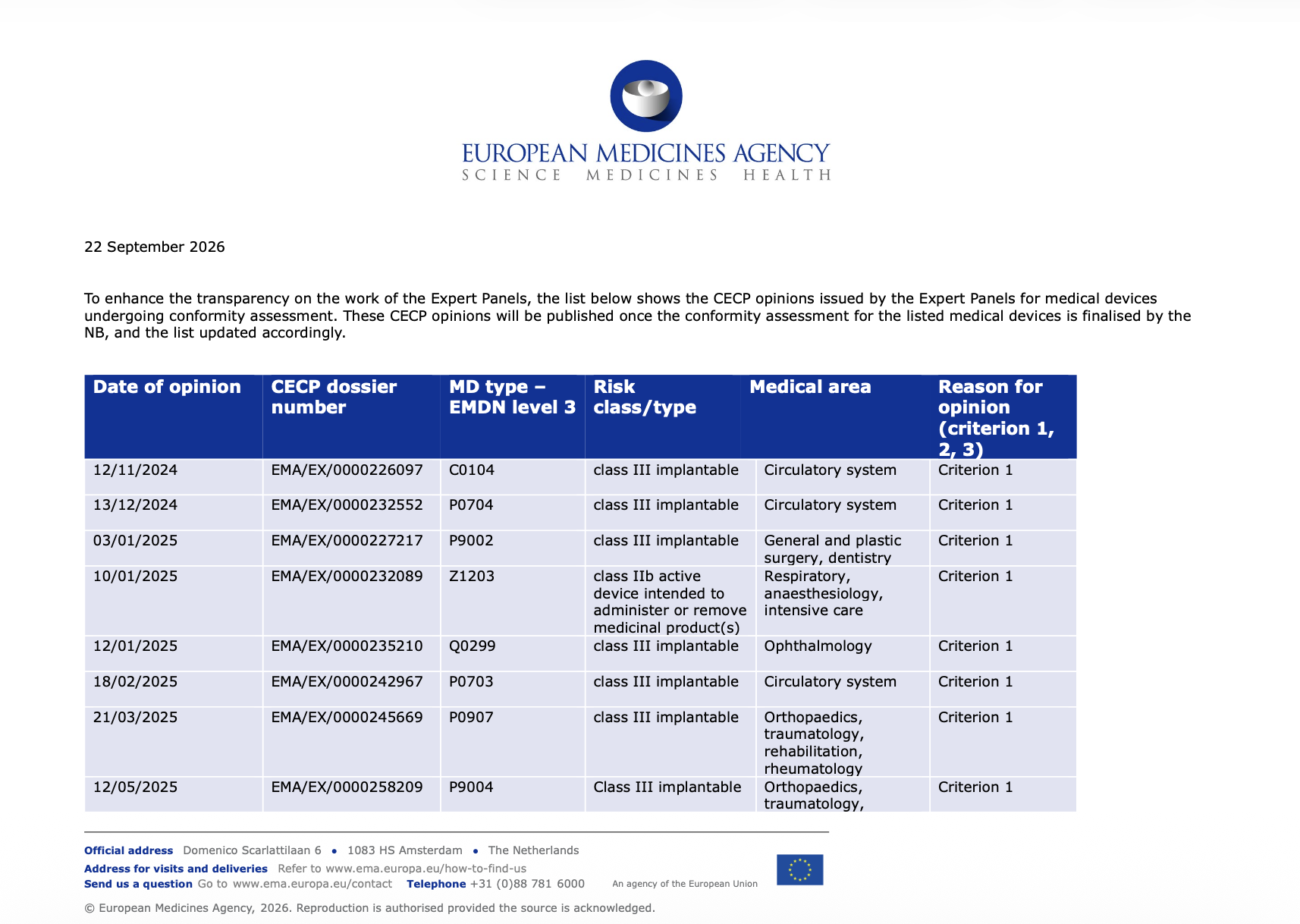
EMA Updates List of CECP Opinions Issued by Medical Device Expert Panels
The EMA has updated its list of CECP opinions issued by Expert Panels for medical devices undergoing conformity assessment, covering Class III implantable and selected Class IIb devices.
Swissmedic Updates Guidance on Field Safety Corrective Actions for Economic Operators
Swissmedic has updated its guidance on Field Safety Corrective Actions, clarifying reporting responsibilities, electronic submissions, FSN publication, timelines, customer follow-up and data protection.
Swissmedic Updates Guidance on Products Without an Intended Medical Purpose
Swissmedic has updated its guidance on products without an intended medical purpose under Annex 1 MedDO, covering transitional provisions, conformity assessment, registration, economic operators and vigilance requirements.
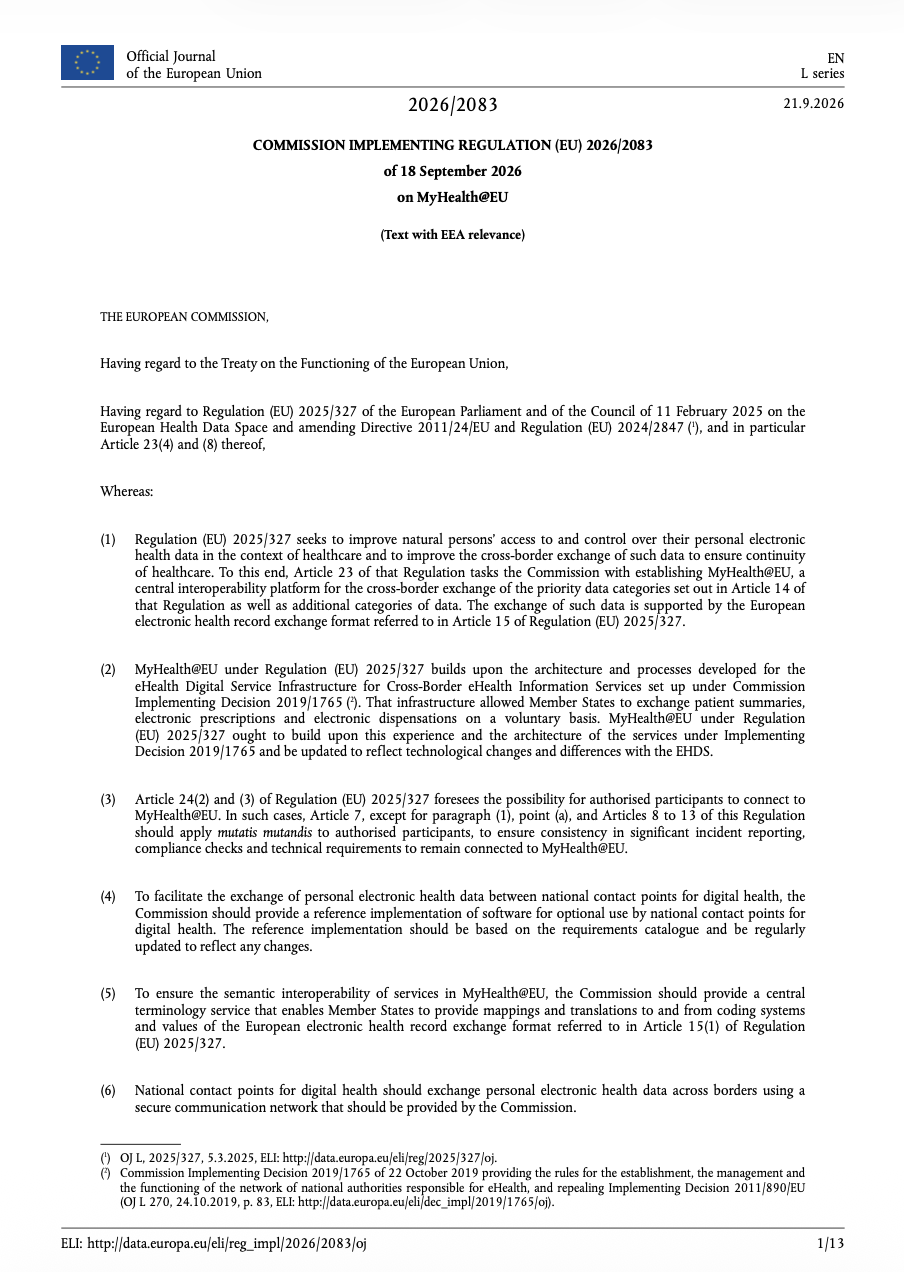
EU Adopts Implementing Regulation on MyHealth@EU Cross-Border Health Data Exchange
The European Commission has adopted Implementing Regulation (EU) 2026/2083 on MyHealth@EU, setting rules for cybersecurity, interoperability, compliance checks, incident management and cross-border health data exchange.
Portugal Reaches 86% eHealth Maturity in EU Digital Decade Study
Portugal achieved an 86% eHealth maturity score in 2023, above the EU-27 average, with strong digital access to health records and expanded healthcare provider participation.
ICH Publishes Updated E14/S7B Q&As on QT/QTc and Proarrhythmic Risk
ICH has published updated E14/S7B Questions & Answers (R1), providing new implementation support on QT/QTc prolongation, proarrhythmic risk, ECG methodology, study design and nonclinical assessment.
FDA Issues Draft Guidance on Electronic Submission Templates for PMAs
The FDA has issued draft guidance on electronic submission templates for PMAs and certain PMA supplements, covering eSTAR structure, technical screening, exemptions and future mandatory electronic submission requirements.
MHRA Updates Pre-Submission Advice and Support for Innovative Medicines
The MHRA has updated its guidance on pre-submission advice for innovative medicines, covering notification timelines, pre-submission meetings, Direct National Route, IRP, ACCESS and Project Orbis.
MHRA Updates Guidance on Patient and Public Involvement in Regulatory Decision-Making
The MHRA has updated its guidance on patient and public involvement, covering its engagement approach, Patient and Public Community, rare disease work, ILAP, AI in healthcare and participation payments.
NIST Publishes Guidance on Protecting Tokens and Assertions from Forgery, Theft and Misuse
NIST IR 8587 provides implementation recommendations to protect identity and access tokens from forgery, theft and misuse, covering cryptographic keys, token validation, SSO, federation, APIs and cloud security.
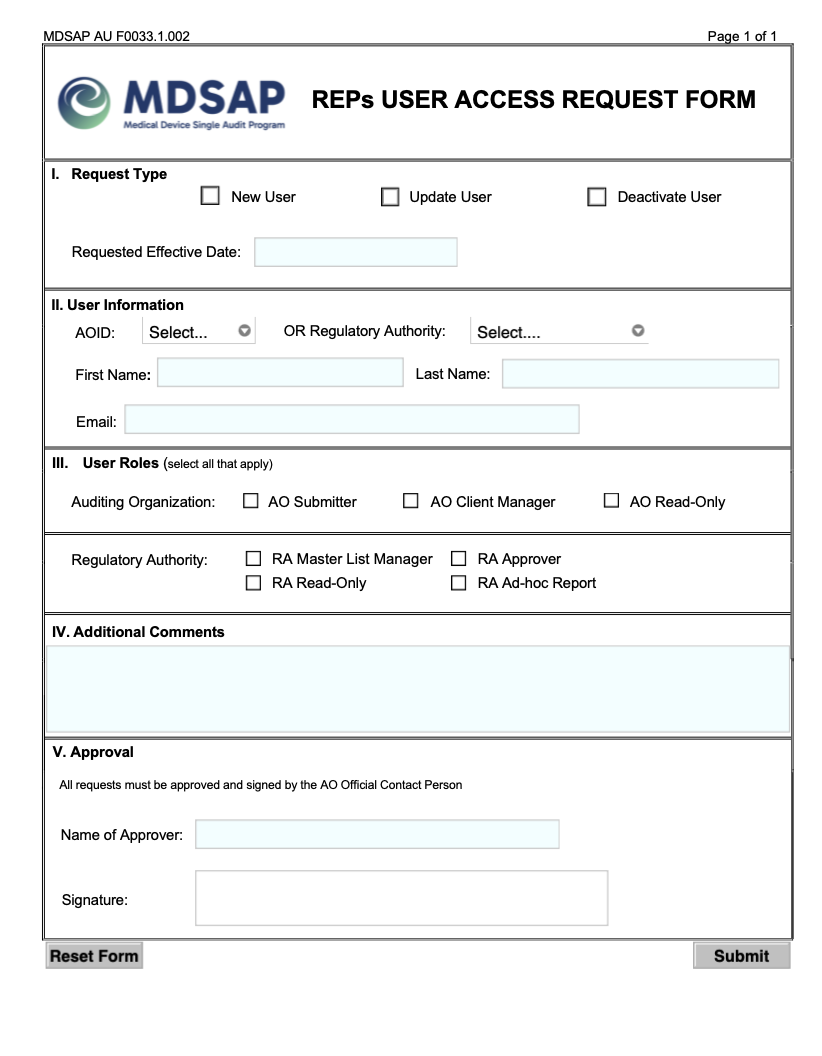
MDSAP Issues REPs User Access Request Form
MDSAP has issued the REPs User Access Request Form, allowing requests for new users, user updates and deactivation, with defined roles for Auditing Organizations and Regulatory Authorities.
Health Canada Updates Compliance and Enforcement Policy for Health Products
Health Canada has updated POL-0001, its national compliance and enforcement policy for health products, covering medical devices, regulated activities, inspections, risk-based enforcement and corrective actions.
EU COMBINE Programme Publishes Sponsors’ Guide on Safety Reporting in Combined Studies
The COMBINE programme has published a new sponsors’ guide on safety reporting in combined studies under the CTR, MDR and IVDR, covering responsibilities, reporting timelines, communication pathways and national requirements.
FDA Launches CDRH Regulatory Reliance Portal for Medical Devices
The FDA’s CDRH Regulatory Reliance Portal provides practical resources for regulatory authorities using FDA medical device decisions, databases, inspections and post-market information in reliance-based pathways.
TGA Updates Guidance on Prominently Displayed Information in Therapeutic Goods Advertising
The TGA has updated guidance on mandatory statements and prominently displayed information in therapeutic goods advertising, including requirements for medical devices, social media, online sales and health warnings.
MDSAP Updates QMS Management Responsibility and Management Review Procedure
MDSAP has updated its QMS Management Responsibility and Management Review Procedure, clarifying responsibilities, management review frequency, review inputs, quorum requirements and follow-up of action items.
European Commission Publishes New Templates for Patient, Carer and Clinician Input in Joint Clinical Assessments
The European Commission has published three new templates to support written input from patients, carers and clinicians during joint clinical assessments, including scoping-phase templates and a comment form.
MedTech Europe Calls Against Reusability by Default Under MDR Article 17
MedTech Europe has published a position paper arguing that reusability should not become the regulatory default for single-use medical devices under MDR Article 17, while supporting safe, evidence-based reprocessing.
UK Health Bill Proposes New Medical Device Licensing Regime for Great Britain
The UK Health Bill 2026 proposes new powers to establish a medical device licensing regime for Great Britain, enabling MHRA to directly assess and license devices through future secondary legislation.