TGA Introduces Streamlined UDI Consent-to-Supply Pathway for Non-Compliant Medical Devices
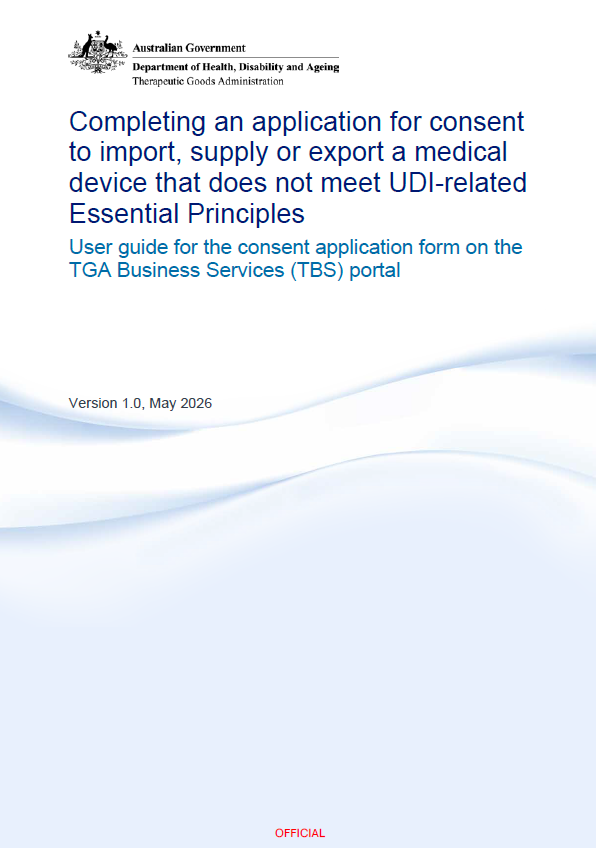
Australia’s Therapeutic Goods Administration (TGA) has published a new guidance document explaining how sponsors can apply for consent to import, supply or export medical devices that do not yet comply with UDI-related Essential Principles.
The guidance accompanies Australia’s phased implementation of the Unique Device Identification (UDI) framework, which becomes mandatory for Class III and Class IIb medical devices from 1 July 2026.
What is changing?
The TGA has introduced a dedicated and streamlined “UDI Consent to Supply (CtS)” process specifically for UDI-related non-conformities. According to the guidance, this pathway is intended for situations where sponsors are temporarily unable to meet UDI obligations due to implementation challenges, such as updates to:
manufacturing processes,
quality management systems,
IT infrastructure, and
business processes.
The regulator states that UDI non-compliance generally presents a low safety risk and is unlikely to affect the safety or performance of the device itself. This has allowed the TGA to create a reduced-fee and simplified approval pathway.
Important timing considerations for manufacturers
The guidance strongly encourages sponsors to submit UDI CtS applications from 1 July 2026 onwards, rather than earlier. Applications submitted before this date will still be assessed under the standard Consent to Supply process and will be subject to the higher existing fees.
Notably, the TGA also states that it does not intend to take regulatory action against sponsors who apply for a UDI CtS from 1 July 2026 and continue importing or supplying devices while awaiting approval.
For manufacturers and sponsors, this provides an important transitional safeguard during the early implementation phase of the Australian UDI system.
Which devices are eligible?
Eligibility depends on device classification and implementation timelines. The guidance confirms:
Class III and Class IIb devices become eligible from 1 July 2026
Class IIa devices become eligible from 1 July 2026 because they fall within the 12-month pre-compliance window
lower-risk devices follow in later phases.
The TGA also clarifies that applications can only include UDI-related Essential Principles. If non-UDI Essential Principles are included, the application will automatically move to the standard CtS pathway with full fees.
Key operational implications
The guidance contains several practical points that manufacturers should carefully consider:
Maximum consent duration limited to two years
The TGA will only grant a maximum consent period of two years per application. Extensions will not be granted, although sponsors may reapply if needed.
Device grouping strategy matters
Sponsors can include multiple device classes in a single application, but doing so may reduce the effective consent duration for some devices. The TGA recommends submitting separate applications where manufacturers want to maximise the full two-year period for each classification.
This is likely to become an important strategic consideration for larger manufacturers managing broad ARTG portfolios.
Reduced fees for UDI-only applications
The new framework introduces significantly reduced application fees for UDI-only CtS applications from 1 July 2026. The fee structure is based on the number of ARTG entries included in the submission.
However, sponsors submitting applications before July 2026 will not receive retrospective refunds once the reduced-fee model enters into force.
Why this matters
The publication provides early clarity on how Australia intends to operationalise UDI enforcement during the transition period. For manufacturers and sponsors, the document highlights that the TGA is taking a pragmatic approach to implementation, while still expecting companies to demonstrate active remediation plans toward full UDI compliance.
Companies supplying devices in Australia should now begin reviewing:
UDI readiness timelines,
ARTG portfolio grouping strategies,
internal remediation plans,
labelling and database submission gaps, and
whether separate CtS applications may be operationally advantageous.
The full TGA guidance document, “Completing an application for consent to import, supply or export a medical device that does not meet UDI-related Essential Principles”, was published in May 2026.
Read the full document below.