TGA Updates Guidance on the Use of Comparable Overseas Regulatory Assessments for Medical Devices
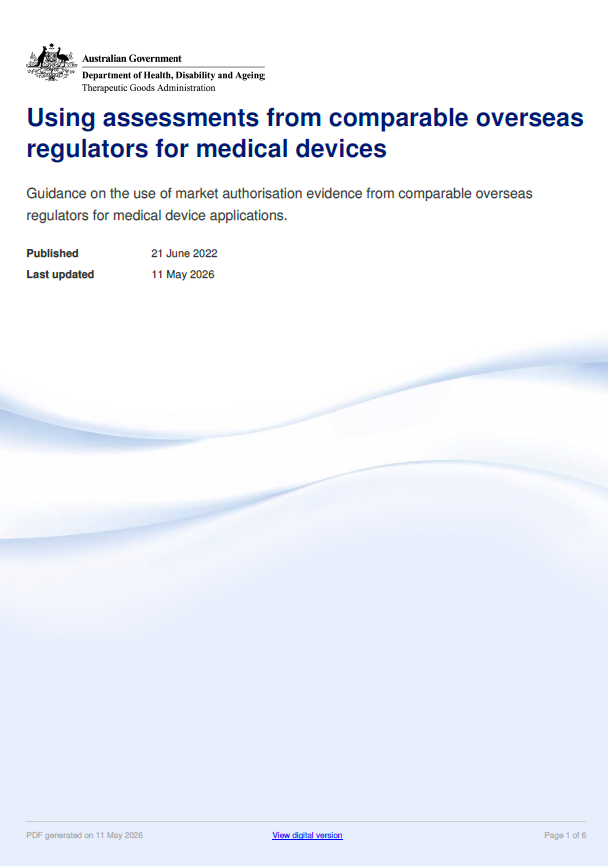
The Australian Therapeutic Goods Administration (TGA) has updated its guidance on the use of market authorisation evidence from comparable overseas regulators for medical device applications.
The revised guidance, updated on 11 May 2026, clarifies which international regulatory authorities and assessment bodies may support applications for inclusion in the Australian Register of Therapeutic Goods (ARTG), as well as abridged conformity assessment procedures.
One of the most relevant updates for manufacturers is the formal inclusion of approved bodies designated by the UK Medicines and Healthcare products Regulatory Agency (MHRA) among the recognised comparable overseas regulators.
Which Overseas Authorities Are Recognised?
According to the TGA, recognised comparable overseas regulators and assessment bodies include:
European Union notified bodies
United States FDA
Health Canada
MDSAP Auditing Organisations
Japan’s PMDA and Ministry of Health, Labour and Welfare
Singapore Health Sciences Authority (HSA)
UK approved bodies designated by the MHRA
The guidance confirms that sponsors may use evidence from these regulators when submitting applications for ARTG inclusion and, in some cases, to support abridged TGA conformity assessment procedures.
What This Means for Manufacturers
For medical device manufacturers already operating in multiple regulated markets, this guidance reinforces the increasing global alignment between regulatory authorities.
Manufacturers with existing approvals or assessments from recognised jurisdictions may benefit from:
Reduced duplication of regulatory assessments
More efficient market access pathways in Australia
Better leverage of existing technical documentation and regulatory evidence
Increased value of international compliance strategies, including MDR, FDA and MDSAP pathways
However, the TGA also makes clear that overseas evidence is not automatically accepted. The regulator evaluates comparability based on several criteria, including regulatory framework alignment, lifecycle oversight, post-market vigilance systems, international cooperation, and regulator expertise.
Focus on International Regulatory Alignment
The guidance highlights the TGA’s continued reliance on international harmonisation principles, particularly through participation in the International Medical Device Regulators Forum (IMDRF).
This trend is especially important for manufacturers planning global market expansion, as regulatory convergence can help optimise compliance efforts across different jurisdictions.
Manufacturers should also note that the TGA expects overseas regulators to maintain robust post-market surveillance systems and to operate within clearly defined assessment frameworks using internationally recognised standards.
Smart MDR Perspective
For manufacturers already holding CE certificates, FDA clearances, MDSAP certification or approvals from other recognised jurisdictions, the updated TGA guidance may support more strategic regulatory planning for Australia.
As international regulatory cooperation continues to evolve, manufacturers should ensure their technical documentation, quality management systems and post-market surveillance activities remain globally aligned and inspection-ready.
The full TGA guidance can be accessed directly through the Australian authority website.
Read the full document below.