FDA Updates Coding Resources for Medical Device Reports: Key Changes from IMDRF 2025 Maintenance
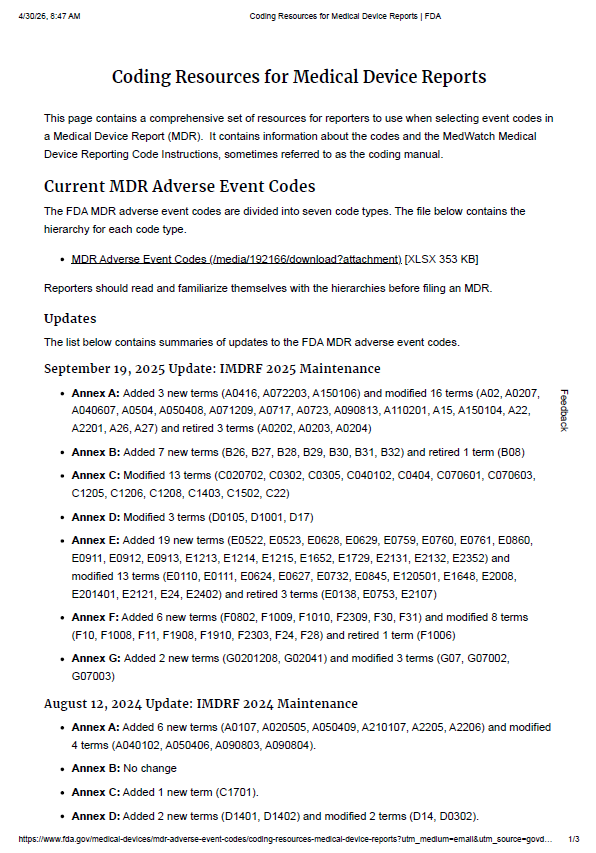
The U.S. Food and Drug Administration (FDA) has published updated coding resources for Medical Device Reports (MDRs), incorporating the latest IMDRF 2025 maintenance updates. These changes affect how adverse events are coded and reported, with potential implications for manufacturers submitting vigilance data in the U.S.
The FDA’s MDR adverse event coding system is structured across seven code types, with detailed hierarchies that reporters are expected to understand before submitting reports.
What Has Changed?
The September 19, 2025 update introduces a combination of new terms, modifications, and retirements across all annexes (A–G):
Annex A:
3 new terms added
16 terms modified
3 terms retired
Annex B:
7 new terms added
1 term retired
Annex C–D:
Multiple term modifications
Annex E (notably extensive):
19 new terms added
13 terms modified
3 terms retired
Annex F–G:
Several additions, modifications, and limited retirements
These updates follow similar annual maintenance cycles observed in 2024, 2023, and earlier IMDRF releases, reflecting continuous refinement of the global coding framework.
Why This Matters for Manufacturers
Although these are coding-level updates, they can have practical regulatory and operational impacts:
MDR reporting accuracy:
Manufacturers must ensure that adverse events are coded using the latest terminology, as outdated codes may lead to inconsistencies or follow-up requests from regulators.Quality and vigilance systems:
Internal procedures, complaint handling systems, and vigilance databases may require updates to reflect new and retired codes.Trend analysis and signal detection:
Changes in terminology—especially modifications and retirements—can affect data continuity, potentially impacting trend analyses and post-market surveillance activities.Global alignment (IMDRF):
As these codes are aligned with IMDRF terminology, updates may also influence reporting consistency across jurisdictions, particularly for manufacturers operating internationally.
FDA Expectations
The FDA explicitly states that reporters should familiarize themselves with the coding hierarchies before submitting MDRs, reinforcing the importance of correct code selection as part of regulatory compliance.
Looking Ahead
Regular updates to MDR coding structures highlight the importance of maintaining up-to-date vigilance processes. Manufacturers should consider periodic reviews of:
Coding practices
Staff training
Digital reporting systems
to ensure continued compliance with evolving requirements.
Read the full document below.