European Reference Networks Continue to Expand: What It Means for Medical Device Manufacturers
The European Commission has provided an updated overview of the European Reference Networks (ERNs), highlighting their continued expansion and growing role in managing rare, low-prevalence, and complex diseases across Europe.
What are ERNs?
European Reference Networks (ERNs) are cross-border collaborations that connect highly specialised healthcare providers across Europe. Their primary objective is to improve diagnosis and treatment for patients with rare or complex conditions by enabling clinicians to share expertise and discuss clinical cases.
These networks were established under Directive 2011/24/EU on patients’ rights in cross-border healthcare and have been operational since March 2017.
Importantly, patients do not access ERNs directly. Instead, healthcare providers consult ERN experts, with patient consent, within the framework of national healthcare systems.
Continued Growth of ERNs
The ERN system has expanded significantly since its launch:
Initially, 24 ERNs were established, involving 956 specialised units across 313 hospitals in 26 countries.
Following additional calls for membership, the networks have grown substantially.
As of October 2025, ERNs include 1,606 specialised centres across 375 hospitals in 27 EU Member States and Norway.
The networks cover a broad spectrum of disease areas, including rare cancers, neurological disorders, metabolic diseases, and paediatric conditions.
Scope of the Networks
There are currently 24 ERNs, each focused on a specific therapeutic or disease area, such as:
Rare cancers (ERN EURACAN)
Rare neurological diseases (ERN-RND)
Rare metabolic disorders (MetabERN)
Rare respiratory diseases (ERN-LUNG)
Rare cardiovascular conditions (ERN GUARD-Heart)
This structured approach ensures that expertise is concentrated and shared efficiently across Europe.
Why This Matters for Manufacturers
The European Commission document focuses on the structure, scope, and growth of ERNs and does not explicitly define implications for medical device manufacturers. However, based on the role of ERNs as clinical expertise networks, several evidence-based, non-speculative considerations can be highlighted:
1. Access to Concentrated Clinical Expertise
ERNs bring together highly specialised centres across Europe. For manufacturers developing devices for rare or complex conditions, this indicates where relevant clinical expertise is concentrated within the EU.
2. Relevance for Clinical Evidence Generation
Because ERNs focus on rare and complex diseases, they may be relevant environments for:
Clinical investigations involving small or specialised patient populations
Post-market clinical follow-up (PMCF) activities
This is consistent with MDR requirements for clinical evidence (Annex XIV), although ERNs themselves are not referenced in MDR legislation.
3. Insight into Clinical Practice in Rare Diseases
ERNs facilitate collaboration between clinicians across Member States. This may contribute to greater alignment in clinical approaches for rare conditions, which can indirectly inform:
State of the art considerations in clinical evaluation
Understanding of existing treatment pathways
4. No Direct Regulatory Role
It is important to clarify that ERNs:
Do not perform conformity assessments
Are not Notified Bodies or Competent Authorities
Do not grant market access or CE marking
Their role is strictly clinical and advisory within healthcare systems.
Strategic Considerations
Manufacturers should consider how ERNs fit into their broader regulatory and clinical strategy, particularly under the EU MDR framework. Key considerations include:
Leveraging ERN expertise during clinical evaluation (MDR Annex XIV)
Aligning with expectations for rare disease evidence generation
Exploring collaboration opportunities for PMCF activities
Final Thoughts
The continued expansion of European Reference Networks reflects a broader EU effort to strengthen collaboration in highly specialised healthcare. While not a regulatory mechanism, ERNs are becoming increasingly relevant in shaping the clinical landscape in which medical devices are developed, evaluated, and used.
For manufacturers operating in niche or complex therapeutic areas, understanding and engaging with ERNs may offer strategic advantages in both clinical development and post-market activities.
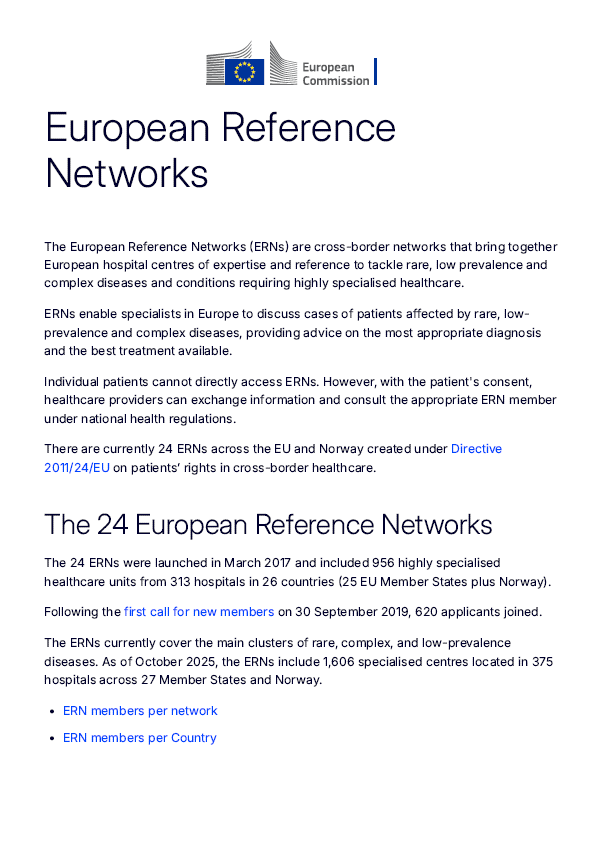
Read the full document below.