European Commission Publishes Draft Regulation to Harmonise Notified Body Practices
Aimed at improving predictability, transparency and fairness in conformity assessments under the MDR and IVDR
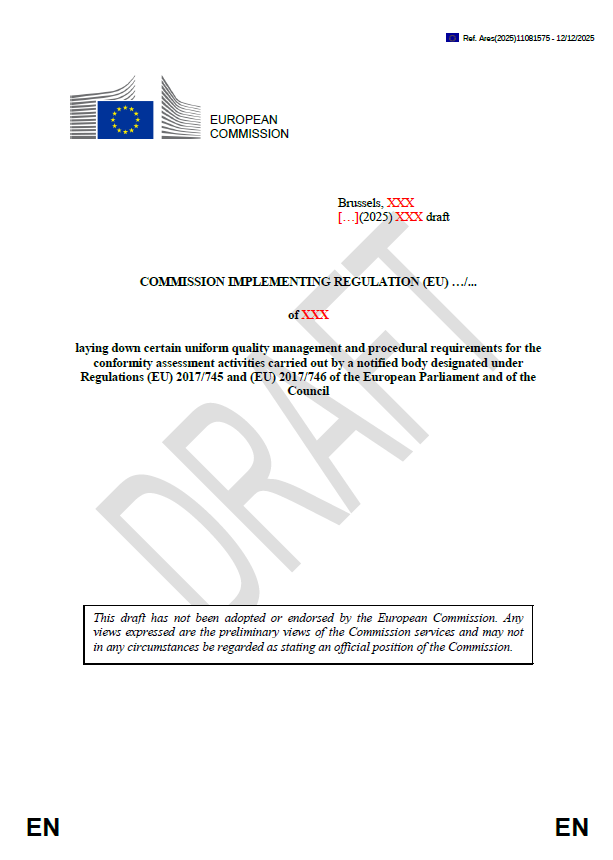
On 12 December 2025, the European Commission released a draft Implementing Regulation intended to establish uniform quality management and procedural requirements for Notified Bodies operating under the Medical Device Regulation (EU) 2017/745 (MDR) and the In Vitro Diagnostic Regulation (EU) 2017/746 (IVDR).
This is a draft text, not yet formally adopted. However, it signals the Commission’s intent to resolve long-standing inconsistencies in how Notified Bodies conduct conformity assessments across the EU — inconsistencies that have created bottlenecks, unequal market access, and uncertainty for many manufacturers, particularly small and medium-sized enterprises.
What’s New in the Proposal?
The proposed regulation introduces mandatory procedural rules for Notified Bodies in several critical areas.
Quotations and Cost Transparency
Before issuing a quotation, Notified Bodies will need to collect a defined minimum set of information from manufacturers — including details on the device, risk classification, production sites, authorised representative (if applicable), and chosen conformity assessment route. The aim is to prevent rejections due to incomplete applications or misalignment with the NB’s scope.
Quotations will have to include a clear breakdown of expected costs, including conformity assessment fees, surveillance activities such as unannounced audits, and separate estimates for travel and accommodation. If costs increase after the quotation is issued, the NB must inform the manufacturer and explain the reasons.
Binding Timelines for Conformity Assessments
To enhance predictability, the draft regulation sets maximum timeframes for key phases of the conformity assessment process. These include defined limits for reviewing applications, performing quality management system audits, assessing technical documentation, and issuing final certification decisions.
The regulation also introduces specific timelines for handling significant changes to devices or QMS, and for completing re-certification reviews.
Importantly, NBs will be required to carry out product and QMS assessments in parallel where possible — reducing total assessment time and accelerating access to market.
Monitoring and Public Reporting
To ensure transparency and accountability, Notified Bodies will need to monitor the duration and costs of their conformity assessments and publish annual reports. These reports will include metrics such as the percentage of assessments completed within deadline, cost deviations from initial quotations, and median total costs.
The reports must be submitted to the Commission and made publicly available on the NB’s website — allowing manufacturers to compare performance across different NBs.
Structured Re-Certification Process
The draft regulation also proposes a standardised approach to re-certification of both product and QMS certificates. It clearly defines the documentation that manufacturers must provide, including evidence of post-market surveillance, risk updates, and alignment with the state of the art.
Notified Bodies will be expected to focus their assessments on what has changed — avoiding unnecessary duplication of the initial certification. Re-certification decisions must be finalised quickly, and updated certificates issued promptly.
When Will This Apply?
Once adopted, the regulation will enter into force 20 days after its publication in the Official Journal of the EU.
Some obligations, such as the new timelines and procedural requirements, will apply three months later. Public reporting of performance data will become mandatory from 2028.
Transitional provisions will ensure that the new rules only apply to new agreements signed after the relevant deadlines.
Why This Matters
For manufacturers, this draft regulation offers a potential breakthrough in addressing delays, cost unpredictability, and the opaque practices that have affected MDR and IVDR certification since their inception.
It promises a more transparent, consistent and efficient system, particularly for:
Manufacturers facing upcoming re-certification deadlines;
SMEs struggling with budgeting or rejected applications;
Companies evaluating alternative Notified Bodies.
While still under consultation, this proposal is a clear signal that EU regulators are listening and intend to act.