FDA Highlights Medical Devices Incorporating Sensor-Based Digital Health Technology
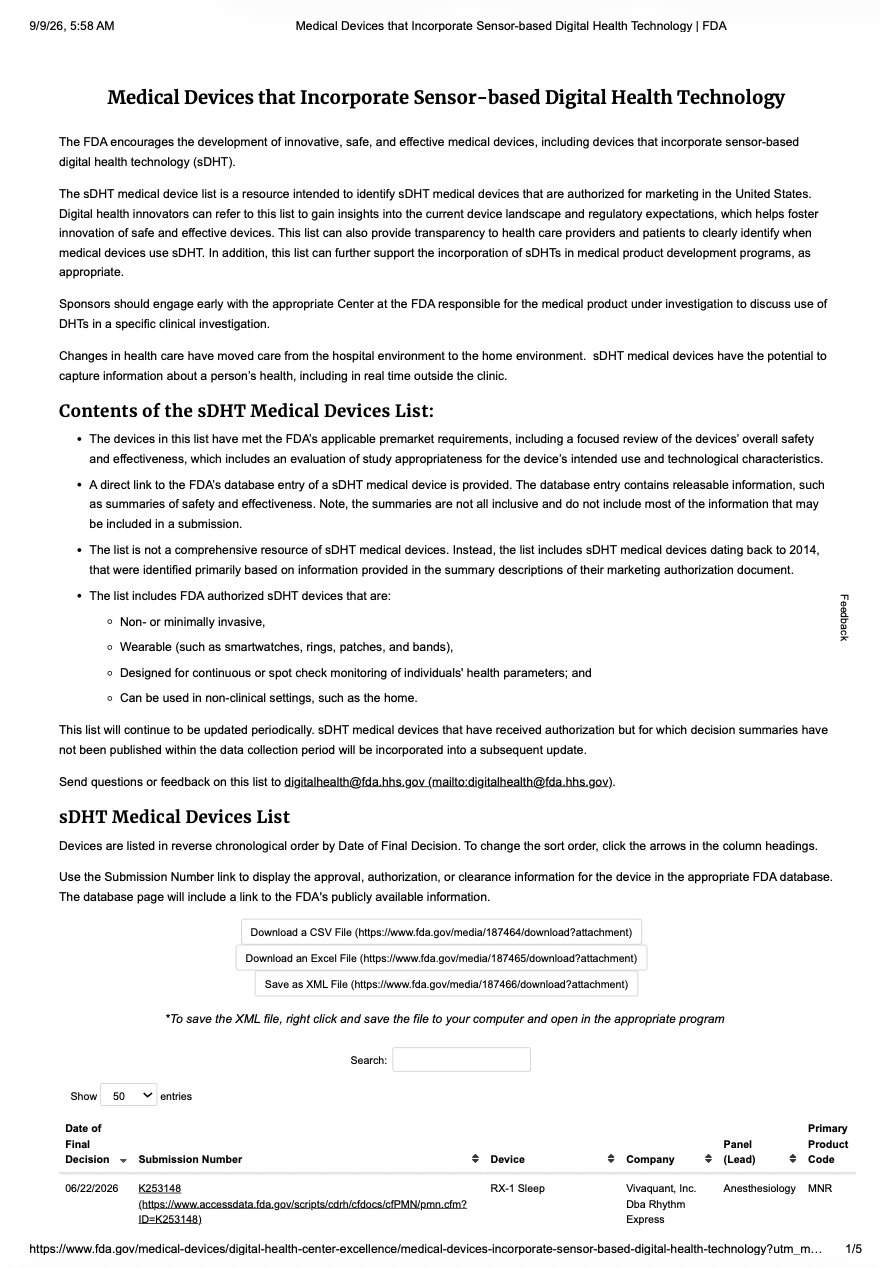
The U.S. Food and Drug Administration, FDA, maintains a list of medical devices that incorporate sensor-based digital health technology, or sDHT.
The FDA states that the list is intended to identify sDHT medical devices authorized for marketing in the United States and to provide transparency to healthcare providers and patients when medical devices use sDHT.
Purpose of the List
According to the FDA, digital health innovators can use the list to gain insights into the current device landscape and regulatory expectations.
The FDA also notes that the list can support the incorporation of sDHTs in medical product development programs, where appropriate.
Sponsors are encouraged to engage early with the appropriate FDA Center responsible for the medical product under investigation to discuss the use of digital health technologies in a specific clinical investigation.
Role of sDHT in Healthcare
The FDA explains that changes in healthcare have moved care from the hospital environment to the home environment.
sDHT medical devices may capture information about a person’s health, including in real time outside the clinic.
Contents of the sDHT Medical Device List
The FDA states that devices included in the list have met applicable premarket requirements.
This includes focused review of the device’s overall safety and effectiveness, including evaluation of study appropriateness for the device’s intended use and technological characteristics.
The list also provides direct links to FDA database entries, which may include releasable information such as summaries of safety and effectiveness.
Scope of the List
The FDA clarifies that the sDHT list is not a comprehensive resource of all sDHT medical devices.
Instead, it includes sDHT medical devices dating back to 2014, identified primarily based on information in the summary descriptions of their marketing authorization documents.
The list includes FDA-authorized sDHT devices that are:
non- or minimally invasive;
wearable, such as smartwatches, rings, patches and bands;
designed for continuous or spot-check monitoring of health parameters;
usable in non-clinical settings, such as the home.
Periodic Updates
The FDA states that the list will continue to be updated periodically.
sDHT medical devices that have received authorization but whose decision summaries have not yet been published within the data collection period will be incorporated into a later update.
List Structure
The devices are listed in reverse chronological order by Date of Final Decision.
The FDA page provides submission number links to approval, authorization or clearance information in the appropriate FDA database, and includes download options for CSV, Excel and XML files.
Latest Entries and Total Devices
The visible table includes recent entries from 2026, such as RX-1 Sleep, Sine Monitoring Parkinsons Disease Tremor Dyskinesia Apple Watch, Stelo Glucose Biosensor System, UNEEG EpiSight System, Dexcom G7 Continuous Glucose Monitoring System, and other cardiovascular, neurology, clinical chemistry, anesthesiology, dental and ophthalmic devices.
The table shown on the FDA page indicates 279 entries in total.
Impact on Medical Device and Digital Health Stakeholders
For medical device manufacturers, digital health companies, wearable device developers, clinical investigation sponsors and regulatory teams, the FDA sDHT list is relevant because it provides a public view of authorized sensor-based technologies and their regulatory context.
Stakeholders should pay particular attention to:
wearable and minimally invasive device design;
continuous and spot-check monitoring claims;
intended use in home and non-clinical settings;
safety and effectiveness evidence;
study appropriateness for the intended use;
technological characteristics;
FDA database entries and public summaries;
early FDA engagement for clinical investigations;
use of sDHTs in medical product development programs;
transparency for healthcare providers and patients.
For companies developing sensor-based digital health technologies, the key message is that FDA continues to support innovation while emphasizing safety, effectiveness, transparency and appropriate regulatory planning for devices used beyond traditional clinical settings.